PR/PR is a full-service boutique publicity agency specializing in professional speakers, consultants, and non-fiction authors. We place our clients in front of their target audience through print media and online sources.

Archive for Current Events – Page 17

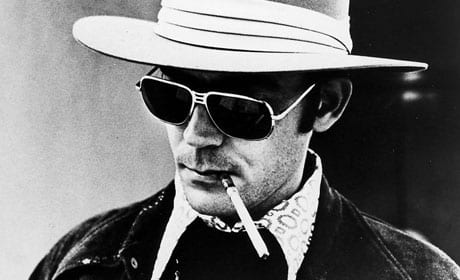
What Would Dr. Gonzo Have to Say?

“The Edge… there is no honest way to explain it because the only people who really know where it is are the ones who have gone over.”

After one of the most mentally grueling weeks in recent memory, with people across the country seemingly losing their minds on a daily basis, I can’t help but think that Hunter Thompson would have something poignant to say. The Good Doctor always had a way of encapsulating the absurd in a palatable fashion; providing his striking brand of commentary to hot-button issues in a similar way that your taxpaying-everyman would describe trimming the hedges.

Now, I would never put words in Dr. Gonzo’s mouth, but I imagine he would find some break in the clouds among the catharsis, in the same vein to which he conducted his limitless search for The American Dream amid the chaos of the sixties. Psychedelics and Chivas aside, Thompson always had his sleep-deprived eyes directed west, toward the greater frontier of human potential.

Hunter stomached the nausea of Nixon and Watergate, the revulsions of an escalating war in Vietnam and a country divided on racial lines. Today, we endure the sustained threat of terrorism, foreign and domestic, and a fractured economy struggling to claw back from the brink of collapse. While decades separate our circumstances, the same undercurrent of perseverance flows through the American condition; the acknowledgement that although it may feel like rock-bottom, there’s always some light peeking through, somewhere.

His penchant for excess did not merely apply to the chemical variety; it fueled Thompson’s belief in the boundless possibilities available in the United States, and that many of the notions we hold about our republic and the direction it’s heading are self-limiting. We’re a nation of survivors, and the horrific events in Boston and Texas will once again prove that fact.

-Carter Breazeale
Boston and Media Responsibility

A harrowing event such as the one that took place yesterday at the Boston Marathon teaches us lessons in the strength and resolve of the human condition, and our ability to unite in the face of tragedy; but it also provides a primer in media responsibility and the impact that hasty reporting has on a news story. I’ve touched on this topic before, but the tragic happenings in Boston have reignited the debate of what role the media should play in reporting, when often times they hold the power to serve as judge and jury in the eyes of the public.

Thankfully, early reports have shown that social media users and the media alike have exercised caution, and are allowing evidence to filter through proper channels before errantly broadcasting it. At this point, much of what we know can only amount to speculation, such as the ongoing search for suspects, which has led authorities to the apartment of a Saudi national who is being viewed as a ‘lead’ in the manhunt. While unnamed sources and backchannels could be utilized to identify the resident of the apartment, news outlets are using an appropriate level of restraint and allowing the story to develop on its own.

As an Atlanta, Georgia native, I naturally draw similarities between Monday’s atrocity and the 1996 Centennial Park bombing, and cannot help but think that Richard Jewell would’ve benefited from this same careful approach by the media. Jewell, a police officer working the Olympics as a security officer, discovered an explosive device under a bench and alerted authorities and began clearing the area. Initially heralded as a hero who prevented further casualties, an FBI leak to the media indicated that Jewell was being investigated as a possible suspect in the bombing.

This was the end of Jewell’s life as he knew it.

The court of public opinion had condemned Jewell, labeled him a lone wolf who planted the bomb on his own so he could discover it and brand himself a hero. Although exonerated later that year, Jewell was haunted by the bombing accusations for the remainder of his life, until he passed away at the young age of 44 in 2007. Even posthumously, Jewell will be forever connected to the Atlanta bombings in 1996, and illustrated as a cautionary tale to the media who desire to be the first to break a story.

The national media has done a superlative job covering the Boston Marathon bombing, and have appeared quick to vet any tips for validity which may cross their news desks. Media outlets exist to provide information to the public, not to influence legal proceedings or investigations. When the two become interwoven, we run the risk of encountering another Richard Jewell scenario.

Bostonians have proven time and time again that they are a resolute people, and this is evidenced by the videos and images of bystanders running toward the blasts to assist any way they can. We will continue to keep the City of Boston in our thoughts and prayers as they continue to move forward from this horrific event.

-Carter Breazeale

The Visceral World of VICE Reporting

Documentarians are no stranger to the risk that accompanies their craft. Active warzones, nefarious characters and the threat of personal peril are staples in any hard-hitting documentary, but no one seems to do danger like the gang of madmen over at VICE Magazine.

Unfiltered and unapologetic, VICE’s heady subject matter is not for the faint of heart; but with the mainstream media largely ignoring many of the topics they choose to cover, they are providing the public with an invaluable outlet to view the world as it really is. Entirely too often, what makes the evening news or the front page is dictated by political or corporate interests, and by the time the final product reaches the masses it is so watered down with rhetoric and hyperbole that the story is a shell of its original incarnation.

Their guerilla documentaries, available for free online, have taken them to the war-torn tenements of Liberia and to the radioactive wilderness of Pripyat, Ukraine; and now, their reputation for providing gritty, no-holds-barred reporting of little-known news has led them to a new series on HBO.

Along with the surface entertainment value that comes with placing their filmmakers in remote locations and possibly in harm’s way, VICE’s Travel Guides have illuminated stories from around the globe that would otherwise go unreported. Their debut episode on HBO had them investigating political assassinations in the Philippines, and taking an in-depth look at the new scourge in the War on Terror: child suicide bombers in Afghanistan.

VICE’s main detractors like to lump their brand of docu-news into the pile of publicity stunt journalism, where the story takes a backseat to the shocks. CEO and co-founder Shane Smith had this rebuttal for those who wish to marginalize their efforts: “People think because Vice is irreverent and because we’re crazy, we’re stunt journalists. You know what? I don’t actually care. It’s our job to get into the hardest-to-see places and bring back the best footage—we have the best footage of North Korea ever shot. If that’s a stunt, then I’ll keep on doing stunts until I die.”

It’s this brazen attitude that permeates through everything that VICE does, and it allows the viewer (or reader) to observe the news through a looking glass of unabashed objectivity, where the stories are allowed to speak for themselves. Restyling journalism as we know it, VICE’s groundbreaking international work is shedding light on the previously overlooked, and providing a voice for the voiceless around the globe.

-Carter Breazeale

Simple Chemistry, Folks

Regardless of how calendar-conscious of a society we’ve become, April Fools’ Day inevitably catches a few of us off-guard, and for a few fleeting moments we fall victim to faulty memories and gullibility. The most publicized prank came at the expense of an ill-informed community and a couple of country DJs who overestimated their audience’s April-awareness.

Learn your chemistry, kids.

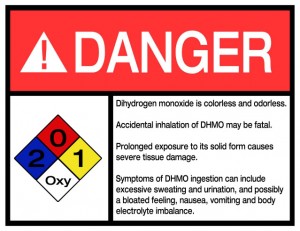
The Prank: Naples, Florida’s Gator Country 101.9’s morning-drive show, featuring DJs Val St. John and Scott Fish, announced on-air that the city’s water supply had been contaminated with ‘dihydrogen monoxide.’ For the unfamiliar or those that never caught an episode of Bill Nye the Science Guy: dihydrogen monoxide is the chemical name for water – two hydrogen atoms, one oxygen atom – or, H2O.

The Result: Concerned citizens flooded the local utility company with calls regarding the safety of their water. This resulted in exhausted and exasperated customer service representatives who found themselves giving impromptu chemistry lessons over the phone throughout the day.

The Aftermath: “It is one thing when radio stations change their format or other crazy things they do. But you are messing with one of the big three — food, water or shelter. They just went too far.” This was the statement that program director Tony Renda gave to the media, after announcing that the two DJs had been suspended indefinitely.

Their suspension immediately reeks of a public relations exploit, especially considering when you visit Gator Country’s site you’re greeted with a listener poll as to when they should return (75% never, really?). From my vantage point it appears as an April Fools’ gag gone awry and the station is riding the resulting visibility wave by turning this into an elongated bit.

The Benefit: Did you ever expect our weekly blog to feature a story about broadcasting heavyweight (slight snark) Gator Country 101.9? Neither did I. The story has circulated on a national level, and at least for the meantime is providing a heady level of awareness for a lower-level radio show existing in relative obscurity in Lee County. The long term impact this will have on Val St. John and Scott Fish’s careers remains to be seen, but in the very least, they can say they were featured on Good Morning America, and that’s more than most morning drive country DJs can claim.

-Carter Breazeale

Daylight Savings Dread

“Only the government would believe you could cut a foot off the top of a blanket, sew it to the bottom, and have a longer blanket.”

This Native American chief phrased this a lot more eloquently than I would right now, as my sleep-deprived summation of Daylight Saving Time would include far more four-letter words strung together in a few angry outbursts. This antiquated practice has me currently running at about 60%, even with the help of our faithful office coffee machine. So it is from my post as your resident PR blogger that I am trumpeting the termination of this outdated system of ‘tricking the clocks.’

This bi-annual abomination began wreaking havoc on our collective circadian rhythms sporadically in the late 1800’s, and was permanently incorporated into American life during the energy crisis of the 1970’s (save for you lucky folks in Arizona and Hawaii.) Initially instilled to conserve coal stockpiles during World War II, and later to cut down on in-home electricity usage, a vastly altered socio-economic landscape has proven that Daylight Saving Time has officially overstayed its welcome.

A Yahoo story reported this morning that the United States lost a whopping $433,982,548 because of Sunday’s time-switch, a number that is certainly confounding when you take into account that DST was enacted to save energy, and therefore – money. Factor in that sluggish, somnolent feeling we all endured yesterday (and I continue to experience) and, well, it just doesn’t make much sense.

It’s no secret that the U.S. economy is recovering at a glacial pace, and depriving companies of an extra hour to conduct business has proven extremely costly. Nearly $450 million in lost profits is inexcusable, and completely offsets any inherent ‘benefit’ to energy savings with our extra bit of sunlight in the evening.

Another more difficult metric to measure, is the loss of (or the perceived loss of) productivity that arises with an hour of less sleep. Exhausted employees may complete less work, or finish their workloads to a lesser degree than normal. This acts as a hindrance to long term goals, accurate work and overall morale. In order for the business sector to run effectively, it needs to be stocked with well-rested, energetic employees.

Some anti-daylight savings dominoes need to begin falling, because I am completely beat. We are no longer a country that requires this method of regulating the hours, and continuing to do so is only robbing our businesses, national and local, and leaving a workforce full of zombies for a week.

-Carter Breazeale