PR/PR is a full-service boutique publicity agency specializing in professional speakers, consultants, and non-fiction authors. We place our clients in front of their target audience through print media and online sources.

Author Archive for Carter Breazeale – Page 65

The Internet is the New Highschool Hallway

High school was the certifiable nerve center for gossip and rumor. Hallways were constantly abuzz with mutterings of ‘who’s seeing who,’ ‘who did what last weekend,’ and where your reputation felt like the crux of your campus presence. In retrospect, those juvenile murmurs were inconsequential; you’re a successful business owner, you’ve carved a lucrative niche in your local community. The locker-fodder of your past contemporaries is a triviality of your teenage years.

There’s a new loudmouth lurking the corridors of your corporate reality, however: your followers online. Unlike your adolescent notoriety that usually fades when graduation caps are sent airborne, your social media reputation will follow you around like a laser-sighted black cloud until your business collapses or you make the changes to mitigate it.

While the social-media-stubborn may attribute little value to the opinion of some anonymous keyboard-critic, the fact of the matter is, with the advent of Yelp and other aggregate review websites, managing your online standing is of monumental importance.

Many paths can be taken to safeguard your social media rep, each with varying degrees of efficiency and effectiveness. By far, the most productive way to employ your social media platforms in a reputation-management manner is to bolster your customer service capability.

Addressing your customer’s concerns in an expedited fashion through wall-posts, direct-messages or comments will fortify the online community’s impression of your business as an involved, client-focused organization. Dominos will begin to fall in your favor as word of your customer-service prominence circulates the Web, creating new and lifelong supporters alike.

As with most situations in life, when problems arise, cooler heads typically prevail. The same is true online. If you’re forced into crisis-management mode, be it the result of a scathing review blasted on your Facebook wall or an ill-advised status update, the key is to avoid confrontation and address the matters in a calm, dignified way. Any negative-reaction on your part will rapidly trump the initial issue, and potentially amplify the story: affecting your business in the long-run. Try to direct any possibly damaging subjects to a phone or email conversation, where they can be rectified in private.

The word about you in cafeterias and classrooms represents a brief period of your life, but the word circulating the net is the online-embodiment of your business prowess. Take every avenue available to assure that your social media cohorts have nothing but positive things to say.

-Carter Breazeale
Major League Baseball’s Culture of Complicity


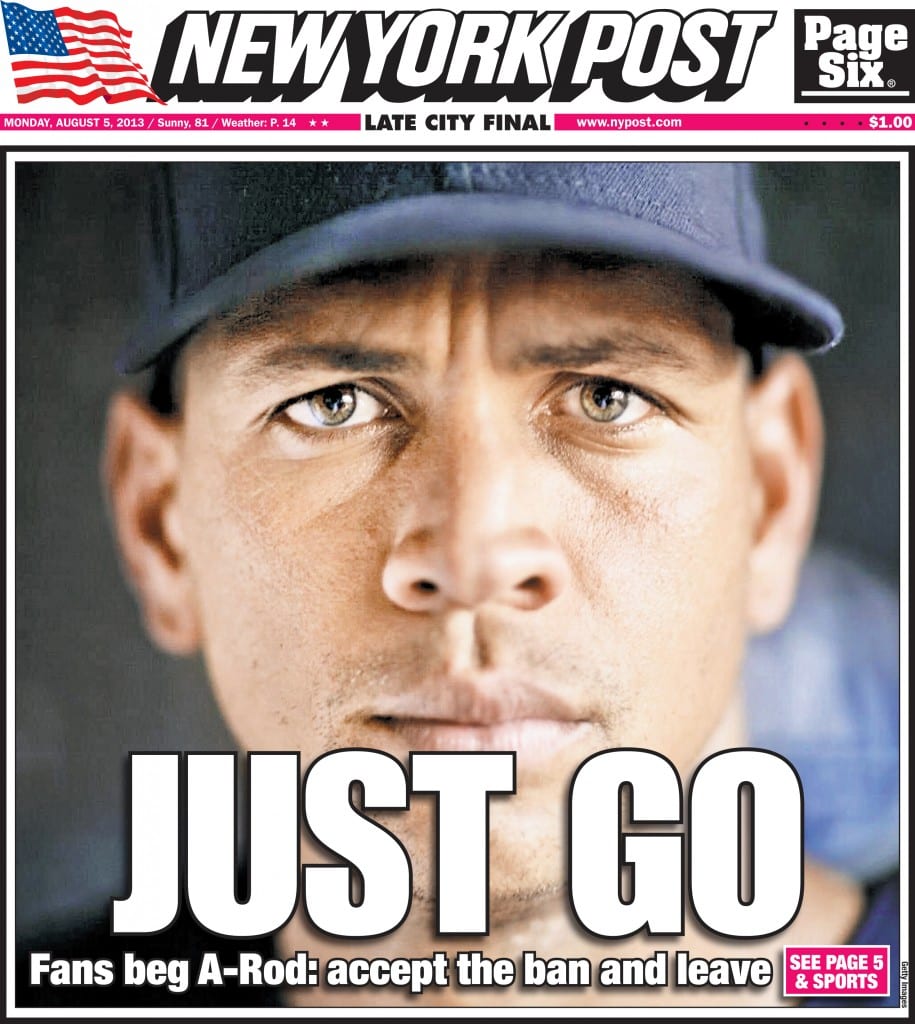
arod

Since he came to the Yankees in 2004, Alex Rodriguez has been New York personified. A man as large as the city he represents; a lightning-rod comparable to the spire that adorns the Empire State Building. He of the veritable caravans of cash, the harem of Hollywood starlets, and the inexorable hubris that accompanies them – he is the walking embodiment of unfettered capitalism. And like a Cesarian twist-of-fate, Major League Baseball – the sycophants that supported and promoted this meteoric uprising – staged a sporting coup d’état, and turned their messianic superstar into a sacrificial lamb for the new guard of the steroid era.

Rodriguez was once trumpeted as the Anti-Barry Bonds. The man preordained to truly eclipse Hank Aaron’s homerun total – the most hallowed record in all of sports – and nail shut the door on baseball’s sordid affair with pharmaceuticals that pervaded the previous two decades.

“Say what you wanted about his braggadocio or his tenuous relationship with the media, at least he’s clean,” they said. “We can deal with the distractions, as long as they’re supplemented with his staggering production,” they said.

And then a 2009 Sports Illustrated report surfaced, alleging positive tests for steroids when he was with the Texas Rangers in 2003, and the carefully crafted façade that was Alex Rodriguez began to crumble. He was not superhuman after all: in fact, he was just as human as any of us; susceptible to the temptations and pressures that accompany performing under constant scrutiny and an all-encompassing spotlight.

With MLB’s latest indictment of A-Rod in the Biogenesis scandal – and the 211-game suspension that comes with it – the Rodriguez cult of personality that baseball’s top brass and power brokers helped create became little more than a propaganda poster for everything immoral in professional sports. A signpost declaring ‘Abandon all hope, ye who enter here.’

At the end of the day, Commissioner Bud Selig had another decoration for his cheaters mantelpiece, and Major League Baseball could wash their tainted hands of the latest indignity that brought attention to the sport for all the wrong reasons.

But baseball fans don’t forget. They didn’t forget the sport’s resurgence in popularity on the artificially-enhanced backs of Bonds, McGwire and Sosa amidst their homerun chase in the late-nineties, and they certainly didn’t forget the Lilliputian slings of contempt launched to take down Bonds when the smoke and mirrors disappeared. Baseball cultivated a culture of herculean giants launching balls into the ionosphere, and then wiped them out once the shift in popular opinion dictated an immediate shift in accepted policy.

Perhaps that’s the saddest aspect of baseball’s steroid saga: that there are no heroes. There were no trailblazers looking to clean up the sport from day-one: only individuals beholden to perception and convenience. Alex Rodriguez fell on the sword when a circular firing squad was more in order: directed at the crooks that sit in the luxury suites and turned a blind-eye to the poisonous track in which the sport was headed when it benefited them, and chopped the head off the snake when it finally didn’t. There’s money to be made in lies and duplicity, and the fact of the matter is Major League Baseball has not solved the PEDs puzzle, they’ve merely provided a whipping boy while they recuse themselves from any responsibility.

-Carter Breazeale

Social Media: The New Weapon in the Propaganda War

War-Propaganda-Poster-Facebook

Propaganda and rhetoric are an intrinsic aspect of warfare. Controlling information – images, news reports and multimedia – is a psy-ops tactic designed as an opiate for the masses and a crucial component in historical revisionism; and some may argue just as dangerous to the general population as depleted uranium and mortar rounds.

The Syrian Civil War has been raging throughout the Middle East since March of 2011, and with recent assertions by the Russian and United States’ governments to begin arming opposite sides of the conflict, it shows no signs of letting up. There have been numerous allegations of war-crimes committed by the Syrian government – mainly the use of chemical nerve gas on civilians – that has added an extra sinister facet to the situation, and has presented Syria with a unique problem: bad wartime PR.

In an attempt to provide their own version of the events taking place from Damascus to Aleppo, the Syrian regime is taking their war on information to the world of social media. In a report by The Independent this morning, President Bashar al-Assad has activated an Instagram account, and has utilized it to provide photographic fodder such as visiting the injured and infirm in hospitals and wiping the tears from children. I’m not making this up.

Propaganda is nothing new. Manipulating the truth has long since been a characteristic of conflict, as it allows for shielding society from actual events and preventing worldwide scrutiny. In the past, propaganda campaigns consisted of ominous radio broadcasts and foreboding artwork displayed publically, but as information is now instantaneous, it has become necessary to reach the intended audience in another medium: the Internet.

With their foray into Instagram, the Syrian government is attempting a 21st century twist on reality distortion. The fact of the matter is their civil war has been a two-year exercise in brutality – from both sides – and the rosy images that al-Assad is propagating only serve to dilute perceptions and harm the public. It’s a devious tactic, to be sure, but controlling online-information is now a crucial cog in the war machine.

-Carter Breazeale

Looking Forward to #NSA2013

Well, it’s that time of year again, when we painstakingly cram every aspect of our on-the-road operation into boxes and suitcases and head to the site of the NSA Annual Convention. This year our destination is the site of our nation’s birth: Philadelphia, where we’ll be until next Wednesday, bringing all our public relations accoutrements to the Marriott in Center City.

And by ‘we’ I mean everyone sans myself, as I will be holding down the fort here in Orlando for the duration of PR/PR’s trip, and making sure the office remains in one piece.

So make sure you visit PR/PR’s booth at the convention! We’ve got convention-only pricing on all of our services, and if you’re lucky, we might have some cheese-steak leftovers and tastykakes hanging around.

See you at #NSA13!

-Carter Breazeale


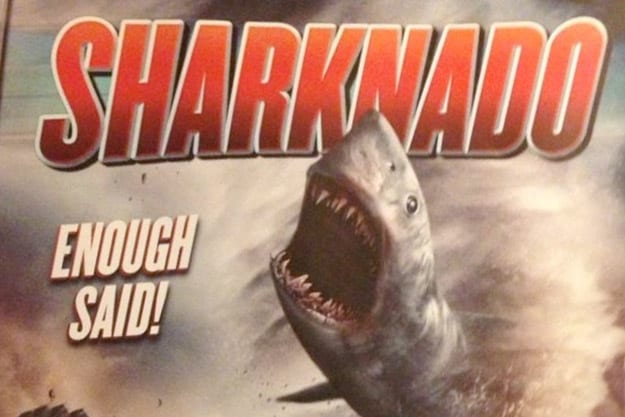
Holy #Sharknado

sharknado

If there’s anything more innately terrifying than a massive F-5 tornado careening through a major city like a runaway band-saw, it’s a massive F-5 tornado careening through a major city like a runaway band-saw FILLED WITH SHARKS. In an ode to sheer American brilliance and ingenuity, this horrifying prospect was brought to life in the made-for-TV production Sharknado, and turned the social media stratosphere into a veritable bloodthirsty feeding frenzy.

#Sharknado absolutely dominated the Twitter conversation last Thursday, with over 440,000 mentions in 24 hours, and peaking at 5,000 tweets-per-minute during its broadcast. While viewer ratings did not reflect the online uproar, the Syfy network has a bona fide cult-classic on their hands, and word on the street is that a sequel is already in the works.

Sharknado 2?! Can Los Angeles at least get a moment to breathe without the threat of airborne man-eating beasts ravaging Sunset Boulevard?

The success of this absurd film cannot be measured in ratings, but in the social media chatter it generated. By causing such a commotion from celebrities such as Mia Farrow and Patton Oswalt, Sharknado all but secured itself a spot amongst other B-horror flick stalwarts in pop-culture lore (Snakes on a Plane, anyone?). In my estimation, Syfy will make boatloads on the backend with DVD sales and merchandising.

Some of the highlights of the Twitter explosion include Lost showrunner Damon Lindelof’s assertion that he would pen the sequel to Sharknado before the movie was complete, and the Red Cross in Oklahoma offering support to any residents affected by tornadic fish.

Films like Sharknado epitomize everything that’s great about Hollywood. Deep pockets and bizarre ideas? Produce a movie. Regardless of how seemingly miniscule your anticipated audience may be, with a ridiculous-yet-original premise, your viewership and visibility may exceed any expectations – and in the case of Sharknado, fans took it hook, line and sinker.

-Carter Breazeale