PR/PR is a full-service boutique publicity agency specializing in professional speakers, consultants, and non-fiction authors. We place our clients in front of their target audience through print media and online sources.

Author Archive for Carter Breazeale – Page 64

Downright Wrong

kkk

And now for something out of the ‘I can’t believe this is still an issue in 2013’ section of our blog, we’re going to discuss some local absurdity. In what’s been making the national news rounds, a high school out of Jacksonville, Florida is outright refusing to change their name amidst public outcry and a petition that has garnered over 75,000 signatures.

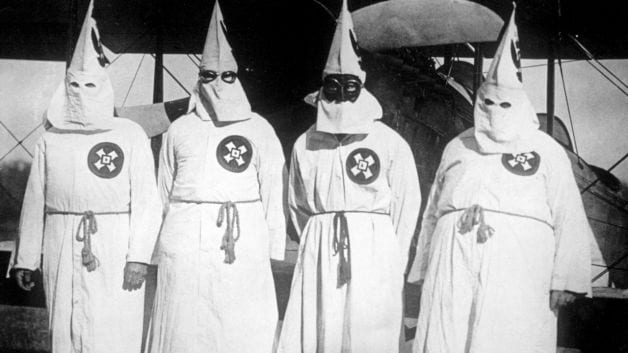
Why are people up in arms about this school’s name? Because its namesake is derived from the first Grand Dragon of the Ku Klux Klan. You read that right: a local learning institution has bared the name of a founding member of the KKK since the early fifties.

Florida, you never cease to amaze me.

The mere fact that this is even up for debate in the 21st century blows my mind. Nathan Bedford Forrest High School was founded and named by the Daughters of the Confederacy in 1959. At the time, the school was whites-only, but now boasts a student-body that is predominantly African-American. Duval County Public Schools has issued a statement reaffirming their position in maintaining the name, and asserted that they would not respond to any public petition.

In the South, we deal with the ‘heritage not hate’ debate fairly often. Every year or so, there is some uproar about a confederate flag flying over a government building, or a local business proudly displaying their Civil War era roots. While I can at least acknowledge each side of those debates, I can’t identify any reason why a public school should be dedicated to a man who violently terrorized black Americans for years.

I cannot even begin to imagine the indignation that some students feel, walking through the halls of a high school that owes its identity to the founding member of one of the most disgraceful organizations in our nation’s history. There are many aspects of our past that must remain in the forefront of our minds, as they were pivotal events that created the country we are today. While we can learn cautionary lessons from the KKK, students should not be expected to learn in institutions named for its establishing member.

-Carter Breazeale
My Favorite Celebrity Twitter Moments

Celebrities use Twitter for a variety of reasons. Some stick to the promotional side of things, some max-out on their fan interaction, and some like to toss back a few high-gravity ales and drunkenly rattle on about whatever happens to be on their mind at the time. Regardless of their social media motivations, following celebrities is one of the most interesting aspects of Twitter. Here are a few of my favorite celeb moments:

Call Aaron Paul!

aaronpaul

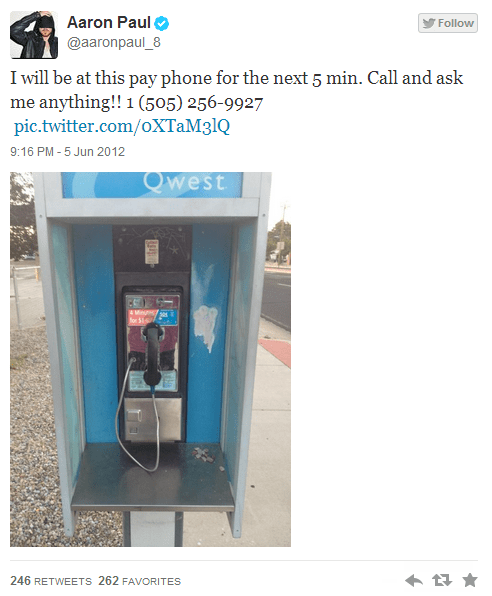
The Breaking Bad star tops my list for most creative usage of his Twitter account. While preparing for the launch of its final season last summer, Aaron tweeted a picture of a random payphone with its accompanying number, and answered fans’ questions for five minutes.

Drunk Dials from Howard Stern on NYE

howardstern

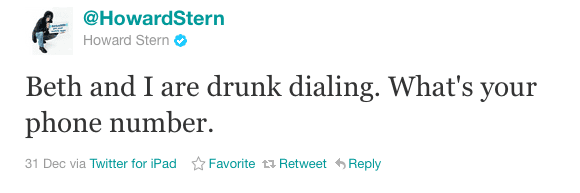
In 2012, Howard Stern and wife Beth Ostrosky spent a portion of their wishing fans a ‘Happy New Year’ who direct-messaged their phone numbers to his account. This was the second year that the King of All Media got a bit loaded on champagne and solicited phone numbers for calls and voice mails, and apparently reached out to over 50 people.

Amanda Bynes Freaking Out on Everybody

amanda-bynes-list-of-people-she-calls-ugly-on-twitter__oPt

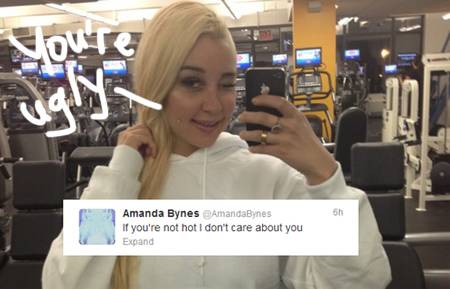
I’m not quite sure what to make of Amanda Bynes on Twitter. Is it a technological cry for help? Is it the ramblings of a crazy person, or an immense online troll-job? Whatever it is, it’s surely entertaining, and I know I’m not alone when I say that seeing Amanda call people ‘ugly’ via Twitter doesn’t get old. There’s just something intriguing about seeing a celebrity resort to schoolyard insults when feuding with other celebrities. Whatever the inspiration is for her outbursts, I say – keep ‘em comin’.

Blurring the Thin Red Line

Verbal gaffes are nothing new to politics. When you spend the majority of your time speaking to reporters, staffers and constituents, you’re bound to trip over your own words or misspeak on occasion; this mainly equates to an embarrassing feature in one news cycle that is quickly forgotten. Some comments, however, get taken to task – and threaten to sully an entire presidential legacy.

Over a year ago, Barack Obama established a ‘thin red line’ when it came to military intervention in Syria: the use of chemical weapons. As we all learned recently, that red line has been crossed – the details are murky at best as to by whom – and now the Obama administration has a geopolitical quandary on its hands.

As action has yet to occur, and international support for any military involvement has rapidly eroded, the White House is dealing with the fallout from vocalizing a hardline stance on Syria. Like George W. Bush’s ‘Mission Accomplished’ banner before him, President Obama is now facing an administration-defining misstep. Establishing ultimatums only works when you’re prepared to back them up, and with dwindling approval at home and abroad, he is faced with the possibility of going to war on unverified evidence or looking weak internationally.

While opinions on the facts of the Syrian situation differ from who you speak with, I believe we can all agree on one: launching tomahawk cruise missiles for the sake of saving face is not the correct response.

It remains to be seen what type of action will take place in Syria, but it’s safe to say that President Obama wishes he could have that ‘thin red line’ remark back. Verbal gaffes occur daily from government officials, but when political gamesmanship turns into political backpedaling, those seemingly mindless foot-in-mouth moments can become the black mark on your own entry in the history books.

-Carter Breazeale

The March on Washington: 50 Years Later

Martin Luther King Jr. at March on Washington

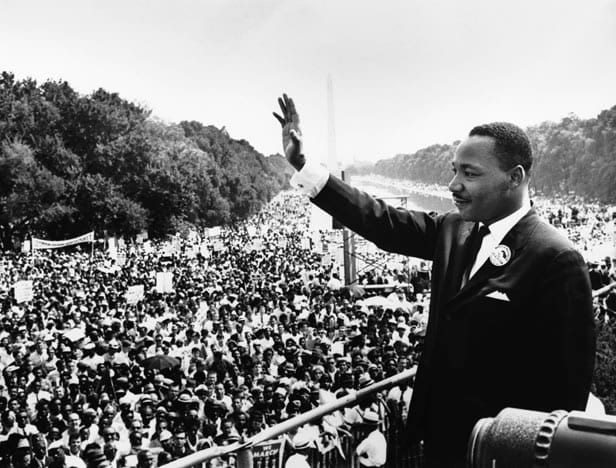
Fifty years ago, one of our nation’s greatest leaders marched from the Washington Monument to the steps of the Lincoln Memorial and delivered one of the seminal speeches in our history. Dr. Martin Luther King’s ‘I Have a Dream’ speech was a generation defining piece of oratory genius, outlining the realities and possibilities of civil rights in the United States.

Half a century later, America is still struggling to realize Dr. King’s dream, but we’re certainly eons from the blight of Jim Crow, bus boycotts and the ‘separate but equal’ mentality that pervaded the cultural attitude of the 1960s. It’s worth assuming that our country may never actualize Reagan’s vision of the shining city on the hill, but constantly striving to set the example for the rest of the globe is a viable and worthy undertaking.

While other countries around the world have doubled-down on restricting rights of certain sects of society – specifically LGBT individuals – state legislatures throughout our nation have taken immense strides to set the global example that there is no precondition on your fundamental rights at a citizen in the United States. They are inalienable, and you can trace recent civil rights court decisions and societal shifts to the words uttered from the Lincoln Memorial steps in 1963.

Like many celebrated historical leaders, Dr. King put himself in an unenviable position during his campaign to change the cultural landscape. Facing death threats, arrests and FBI inquiries as to his past and alleged political leanings, Martin Luther King Jr. continued his crusade to craft a better union. When he was tragically assassinated in 1968, King paid the ultimate sacrifice for the cause he felt absolutely necessary, and we lost one of America’s preeminent voices for change.

When you reflect back on the most pivotal moments in American history, the 1963 March on Washington remains an event that catalyzed a new vision for the United States, and set the tone for the scope of current society.

-Carter Breazeale

Social Media Synthesis: The Blending of Online and Offline

There was a time when there was a dividing line between the online realm and the real world; a veritable 38th parallel separating our Internet personas and our actual reality. In hindsight, that time appears a dystopian landscape, where hash tags and status updates were mysterious jargon confined to the reaches of the World Wide Web, and social media accounts were a novelty as opposed to a necessity.

The coalescing of cyberspace and actuality only further cements the fact that, while in the past, social media outlets were an extension of your personality, they have become an integral aspect of it. Whereas conversation revolving around Facebook or Twitter was previously viewed as a slight social faux pas, it has become a social norm.

It’s a testament to the Internet Age and the stark disparity between ‘the now’ and years gone by, but it also begs the question: has our connectivity hampered our ability to actually connect? When Google is rolling out e-glasses and Apple is thought to have an iWatch in pre-production, are we relying too heavily on social media interaction as opposed to, you know…social interaction?

Where do we begin to redraw that line in the sand that reestablishes social media as a digital addition to our lives rather than the binary manifestation of them? If the current societal pulse is any indication, the fusion of Facebook and other social media platforms with our everyday lives is a trend that will continue to grow.

Whether you view our status update society as enhancing or intrusive, there’s no denying the importance and impact it has on our cultural environment. Social media has reshaped the understanding of traditional reality, and effectively erased the barrier between computer monitors and face to face interaction.

-Carter Breazeale