PR/PR is a full-service boutique publicity agency specializing in professional speakers, consultants, and non-fiction authors. We place our clients in front of their target audience through print media and online sources.

Author Archive for Carter Breazeale – Page 70

Netflix Doubles-Down on House of Cards

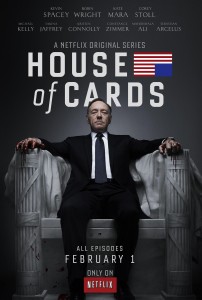
My weekday evenings typically consist of microwaved dinners and abusing my Netflix account. I was preparing for my usual routine last Wednesday when I stumbled upon House of Cards, the flagship made-for-Netflix drama starring Kevin Spacey, sitting temptingly atop the ‘recently added’ section. I recalled the company’s announcement of its own original programming a couple of years ago, as it resulted in a few television channels removing their content from Netflix’s database (wag of the finger to you, Showtime). Three Stouffer’s nights later and I was left blown away by the series’ story arc, Kevin Spacey’s sociopathic portrayal of power-obsessed Congressman Frank Underwood, and Netflix’s audacious decision to take a risk with this series format that has the potential to redefine the television-entertainment industry.

Much like Napster sent record executives scrambling and left many in the legal department at the RIAA pulling their hair out in the late-nineties, House of Cards is Netflix’s declaration of war against the conventional tenets of television production. Shedding the shackles of Nielsen ratings and mandatory advertising, Netflix undoubtedly has TV-execs experiencing comparable levels of anxiety. The recording industry responded with a flurry of high-value lawsuits that effectively shut down Napster, but the precedent had already been set – digital music resonated with the public, and with the inception of platforms such as iTunes and Spotify, has become the widely-accepted standard. Your move, television executives.

By opting to release the entire series at once, Netflix is embracing what makes their service so terrific: subscriber freedom. No longer constricted to the confines of tuning in at a certain hour or setting the DVR, users have the ability to view House of Cards at their leisure, which puts the programming power in their hands. And with the long-awaited new season of Arrested Development slated for release on Netflix in the same format in May, their formulaic transformation of the current incarnation of television-viewing will only continue to garner attention.

Many premium networks have already adopted their own version of the online-model, with services such as HBO GO and Showtime Anytime allowing for streaming content that is unavailable through traditional cable providers. Designed apps for these platforms on tablets and smartphones assures that their subscriber base remains intact and they gain a foothold in a programming marketplace that is moving from living rooms to laptops and Wi-Fi hotspots. The writing on the wall is clear, however, in a corporate-Darwinian sense: TV networks must continue to adapt to a rapidly shifting environment or become relics of the past.

The measuring stick for success of Netflix’s fledgling enterprise will be in year-end subscription numbers versus 2012’s. Will the world’s collective audience follow the trail blazed by the digital music revolution and abandon customary television in favor of a user-friendly, online service? Only time will tell – but this much is certain, with House of Cards and other original programming in their pipeline, Netflix has definitely stacked the deck in their favor.

-Carter Breazeale
Analyzing Super Bowl Commercials

If the Super Bowl is anything other than a sporting event, it’s a triumphant ode to consumerism. In preparation for each annual Super Bowl Sunday, corporations shell out inordinate amounts of cash to secure premium advertising spots for their products or services. Post-Super Bowl commercial and ad analysis has become as important as the game itself, highlighting the perceived ‘winners’ and ‘losers’ of the evening. Let’s run down a few of the favorites around the office, and examine why they were so successful.

Oreo Takes Advantage of the Blackout

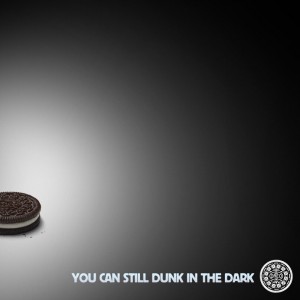
The most impressive (and economical) ad-campaign of Sunday has to go to Oreo, who took advantage of the unexpected 30 minute-plus blackout that occurred shortly after halftime. Throwing together this advertisement on their social media outlets (which was retweeted over 14,000 times and attracted over 20,000 ‘likes’ on Facebook) the folks over at Nabisco received maximum visibility at little expense to their budgets, all on account of keeping on their toes.

Samsung Calls Saul and Utilizes Star-Power

[youtube]https://www.youtube.com/watch?v=5ae7E8J7h7Y[/youtube]

Celebrities are no strangers to Super Bowl commercials, but the key in their effectiveness is casting the right ones. The commercial for Samsung’s ‘Next Big Thing’ contest starred Paul Rudd and Seth Rogen, two of the most recognized comedic faces in Hollywood, but shifted into a higher gear with the addition of Bob Odenkirk as a Samsung Ad-Exec. Odenkirk plays the role of Saul Goodman on arguably the best show on television, Breaking Bad, and shouts of ‘You better call Saul!’ were immediately heard in my living room once he entered the frame. Throw in a Lebron James cameo and you’ve correctly cast the celebrities to have employees talking about your commercial around the water cooler on Monday morning.

Tide’s ‘No Stain is Sacred’

[youtube]https://www.youtube.com/watch?v=GLjjb7-WkUk[/youtube]

Wit and ingenuity go a long way in making a memorable and popular commercial. Tide’s ‘no stain is sacred’ ad worked because of how downright clever it was. Factor in the point that their marketing department only had a couple of weeks to come up with the Joe Montana stain idea, and it only adds to the brilliance of this piece of advertising.

Budweiser Makes Grown Men Cry

[youtube]https://www.youtube.com/watch?v=o2prAccclXs[/youtube]

And that brings us to the ‘aww’ factor. It’s not often you hear of a Super Bowl commercial with emotional impact, but Budweiser’s advertisement featuring its famed Clydesdale horses had the propensity to make even the hardest Ravens fan shed a tear. If you’ve ever seen White Fang, think the scene where Ethan Hawke is forced to release his beloved pet – and then condense it into a minute-long beer commercial set to Fleetwood Mac’s Landslide. Add in a call to action designed to boost their social media presence, and you have a prototypical Super Bowl spot.

-Carter Breazeale

The Customer Service/Branding Control Dichotomy

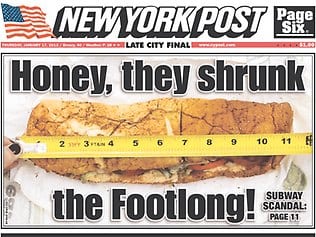
A picture may be worth a thousand words, but how does that translate into dollars and cents? Image-centric social media has been in the spotlight over the last week, first as Subway found themselves the recipient of two class-action suits over missing inches from their foot-long subs, stemming from a Facebook whistleblower, and now there are rumblings of some New York City restaurants banning photographs from within their walls. It’s fascinating to observe the awkward dance taking place between businesses and social media outlets as they adjust to a marketplace that is increasingly being driven on a peer-to-peer, consumer-dictated level. Still – in the case of NYC eateries, are social media platforms such as Instagram being unfairly ostracized in an attempt to control branding and restrict potential negative press?

Corporations such as Subway and McDonalds dedicate a sizable chunk of their annual budgets to their own branding; most notably, professional-grade photographs of the food items they offer. When customers have the ability to immediately upload pictures of their meals to Instagram or Facebook, in a positive or negative light, do they negate the funding allocated for that same purpose?

A fundamental characteristic to maintaining an exemplary public-image, whether as a corporate chain or independently-owned restaurant, is the capability to control your brand. When patrons begin conducting their own ‘brand marketing’ via social media, it creates an interesting quandary for businesses who are toeing the line between keeping their customers happy and protecting their products.

And while some establishments are seeking to limit their online exposure, others have embraced it, and even turned adverse PR into successful marketing strategies. Domino’s famously conducted a risky, but beneficial, advertising campaign where they encouraged pictures of poorly made or delivered pizzas. As opposed to casting their corporation in a negative light, the tactic illuminated the company’s commitment to their clientele and their concerns, and displayed their dedication to getting things right. By demonstrating a refreshing level of honesty rarely seen in Corporate America, the pizza conglomerate reignited the public’s passion for their food, and may have saved a company that was experiencing rapid loss of brand-loyalty.

Whichever side of the social media fence business owners or CEOs sit, there’s no longer denying the commercial impact that it has. While some New York restaurants may attempt to restrict their diners’ photographic freedoms in the name of product-control, they may also experience a loss of support as a result. What are your opinions on Instagram and Facebook pictures in restaurants and private businesses?

-Carter Breazeale


Manti Te’o’s Image Calamity

I’m going to get this out of the way right off the bat – yes, I’m stunned; no, I can’t believe it either; and yes, Sunday’s loss is going to sting for a long time. As an Atlanta sports fan you would think I’d be desensitized to these mammoth collapses and choke-jobs by now, but every single one hurts just as bad as the last. I felt it necessary to address this up front, and hopefully experience some sort of therapeutic catharsis by putting it into words.

As misery loves company, I can at least take solace in the fact that there may be one person currently having a rougher time in the world of sports than me, and that would be Notre Dame’s Manti Te’o. In a story that has more bizarre twists and turns than a David Lynch film, the prodigious linebacker from South Bend has found himself the undesired focal point of the national conversation.

I’ll spare you the salacious details, because by the end of this sentence the story will have changed once more – but suffice to say this has disrupted the Heisman runner-up’s plans as he prepares for the NFL draft. Was the nonexistent/dead girlfriend saga borne of an elaborate hoax that Te’o actively participated in, or is this simply a case of twenty-something naiveté and a cruel prank that snowballed? Sports analysts are drawing their own conclusions, and until Manti makes the decision to shed some light on this extremely murky ordeal, they will continue to do so.

It will be interesting to see how this affects Te’o’s draft-stock. A virtual lock as a top-five pick prior to the emergence of this story (which typically involve hefty signing-bonuses), many now wonder if his value has plummeted out of the first round. Do potential character flaws trump natural athletic prowess?

Protecting your image and personal branding should be on the top of your list of priorities, because as the public’s opinion of you falls, so does the amount you receive on your checks. What steps should Te’o take to ensure he is career is not defined by this odd story? Provide your thoughts in the comments section!

-Carter Breazeale

Getting Humorous with @Skittles

I’m going to begin today’s blog by stating that I am mentally exhausted. The Atlanta Falcons playing hacky sack with my emotions for sixty minutes on Sunday really took a toll on my ability to concentrate, and although we squeaked out a win, I still feel like my psyche was the recipient of a haymaker from Mike Tyson. As endurance and perseverance come with the PR territory, I’m powering through my fatigue to bring you some fresh content for the week.

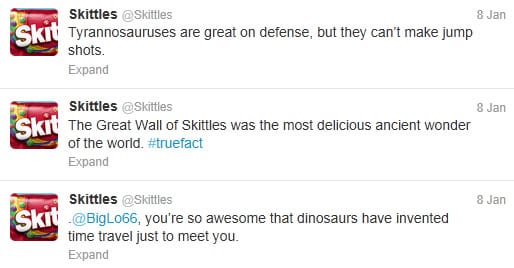
While lurking the web for potential topics for the blog, I stumbled across this Mashable article outlining Skittles’ hilariously inventive usage of their Twitter account. Is their social media team comprised of lunatics or evil geniuses? That’s certainly up for debate; but what does not need to be discussed is the entertainment value of the content they’re providing.


An inherent obstacle in maximizing your effectiveness on Twitter is providing content that other users want to follow. Whether it’s informative and educational with the aim of solving a reader’s problems, or nonsensical and absurd with the goal of humor, you need to create micro-blogs that make people want to engage. In the case of Skittles’ online publicity, 140 characters merely about candy would be excruciatingly mundane, so the company designed a comically bizarre strategy that’s congruent with their commercials and branding.

If you’re embarking on a new social media campaign or tinkering with your current tactics, it is essential to scrutinize your updates before your post them. Are your messages worth reading, or are you simply blasting out tweets for no reason? Content is the cornerstone of any successful social media campaign, and as the folks over at Skittles demonstrated, there are many options when creating an online voice that works for you.

-Carter Breazeale